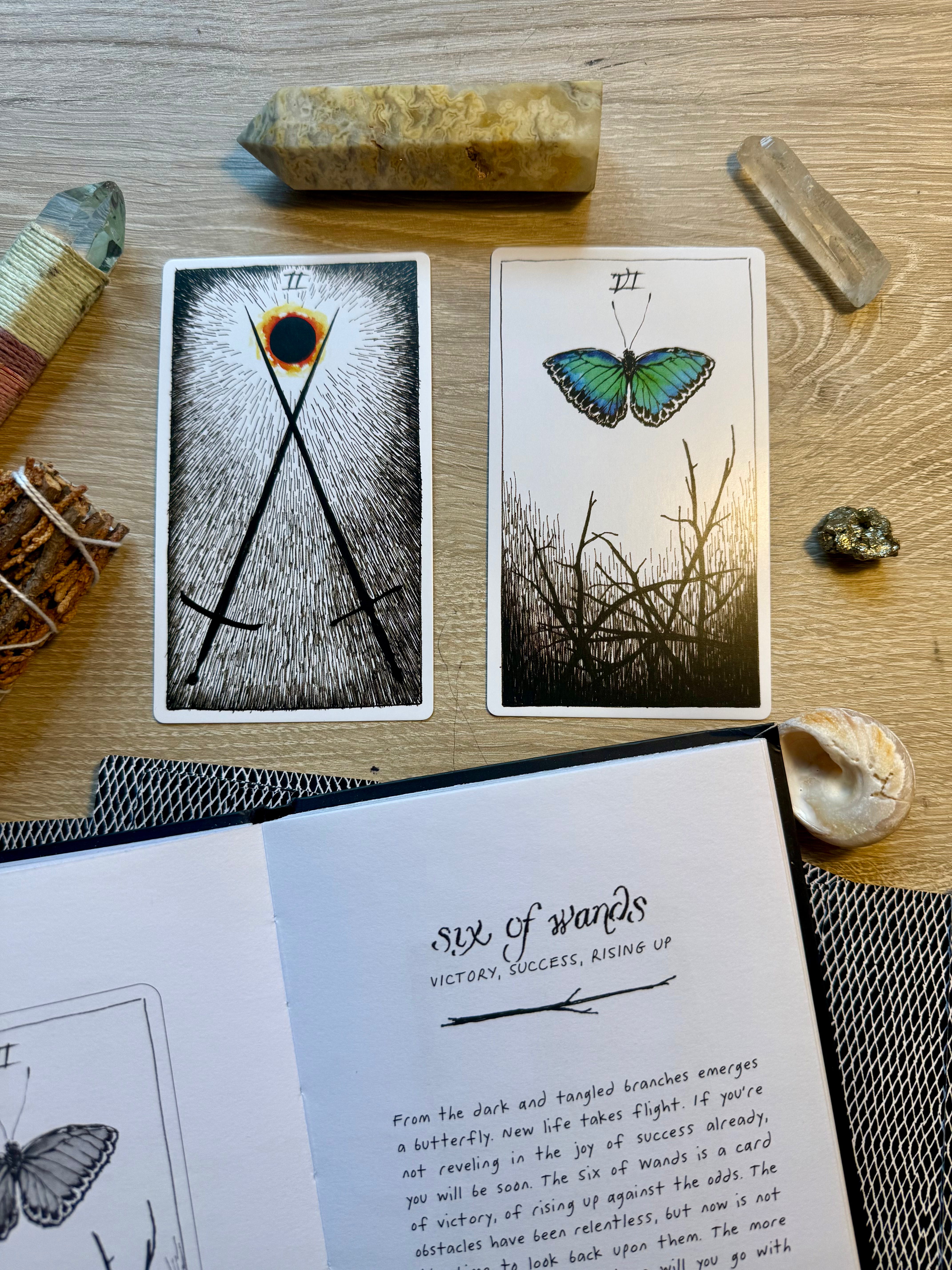
The Map Was Always There
The hero's journey, tarot, and what they both know about who you are becoming


A dear friend taught me about reading tarot around 2013 at a bar over a bottle of savory white wine. I thought tarot was saved for psychics with long nails, neon signs, and crystal balls, but no, no. I was wrong. From then, I started reading tarot intuitively, first for myself, then my friends, and then eventually some of my clients. It almost called to me, a way to make sense of what was happening in a spiritual framework that had such a long lineage.
Tarot, as we know it today, originated in northern Italy in the early 15th century, initially as a card game called tarocchi played by the nobility. The cards were not used to find meaning at first. That came later, around the 18th century, when French occultists began interpreting the imagery as a symbolic system connected to Kabbalah, astrology, and esoteric philosophy (sign me up!). The major arcana, the 22 cards that tell the soul’s journey, became the centerpiece of that spiritual tradition. By the time the Rider-Waite deck was published in 1909 (the one most people picture when they think of tarot) the imagery had been deliberately designed to encode layers of psychological and archetypal meaning. What began as a game had become a spiritual roadmap.
Most people are familiar with the hero’s journey, the narrative arc that Joseph Campbell identified across myths, religions, and stories from every culture in human history. The hero receives a call, crosses a threshold, faces trials, is transformed, and returns changed. What fewer people know is that the major arcana of the tarot is built on the exact same foundation. The 22 cards trace the full arc of human transformation, from the first innocent step into the unknown all the way through to integration and completion.
When I started looking at my own transitions through this lens, I realized it was the most accurate description of what actually happens during a period of change that I had ever encountered. Not because tarot is magic (because it is), but because it is sharper than most frameworks in a way that actually gets at what is happening inside you.
Here is what that arc actually looks like through the lens of transition.